Being a mother and a pediatrician has taught me that love and science are not on opposite sides, but rather complement each other when it comes to understanding life in its most authentic form.
I became a mother after receiving my pediatrician degree. So I was already very familiar with the developmental stages of a neurotypical child, the expected milestones for each age, and the warning signs. However, I never imagined that this clinical knowledge would become the compass that would guide me as a mother.
When my eldest son was still very young (10 months old), I began to notice signs that made me think something in his development was following a different path. I carefully observed every gesture, every glance, every silence, and deep down I felt a certainty: something was wrong. I consulted various specialists—pediatric neurologists, child psychiatrists—but at that time very few believed it could be autism. Even so, I persevered. A mother's intuition and clinical observation came together, and together they helped me open the door to a diagnosis that would explain so much and transform our lives.
The journey wasn't easy. In my region, there are few professionals specializing in autism, and that made the process longer, and sometimes more lonely. But
Even more revealing was my experience: I understood firsthand what so many families feel when they seek answers and support. That experience marked a turning point in my medical practice.
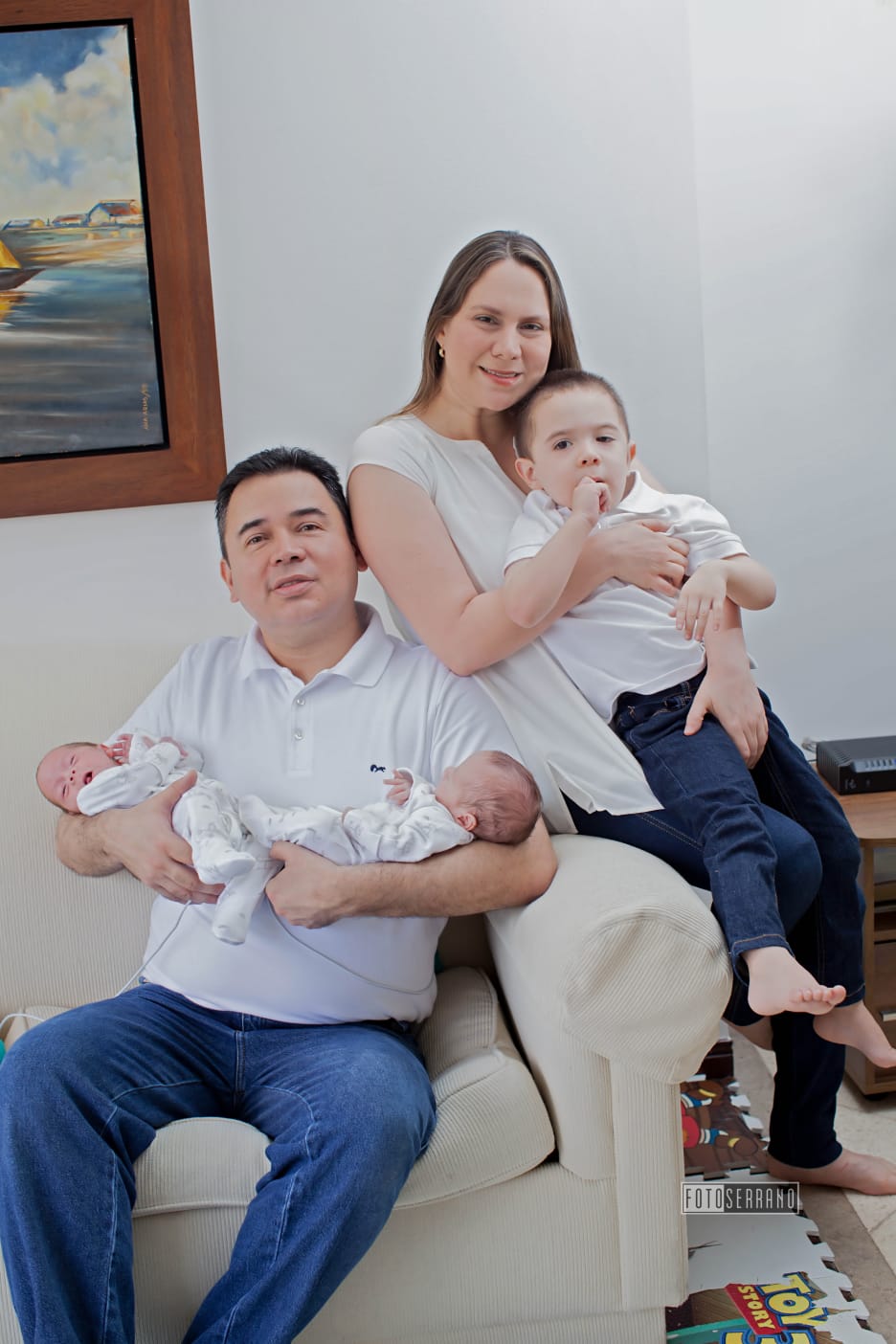
Some time later, my husband and I—with faith, hope, and hearts full of love—decided to have another child, knowing there was a possibility that he might also be on the autism spectrum. We talked about it, we prayed about it, and we decided that love is always stronger than fear. The surprise was that not one, but two arrived: monochorionic, identical twins.
When they were born, I was no longer the same. I had gained more knowledge, completed a master's degree in Autism Spectrum Disorder, and, above all, had the experience that only a mother can have. I detected the signs early, sought the necessary help, and confirmed something I repeat today in every talk, in every meeting with parents and colleagues: autism doesn't manifest in just one way. Each child is their own universe. Even my twins, sharing the same DNA, express their autism differently, with their own rhythms, interests, and ways of connecting with the world.
Today, in addition to practicing pediatrics, I support other families on their journey. I am part of a local support network that belongs to the Colombian Network of
Autism Spectrum Disorder, and from that perspective, I contribute my small part. My purpose is to help more parents properly guide their journeys, find the guidance they need, and discover that it is indeed possible to build a full, adapted, loving, and hopeful life with their children.
Experiencing autism from these two perspectives—that of a mother and that of a doctor—has transformed me. I've learned that a diagnosis isn't an end point, but a starting point for growth, love, and understanding human diversity in its most luminous form. Every day my children teach me that life has many languages, and that what's essential isn't always expressed with words, but with glances, gestures, and shared moments.
Walking alongside them is my greatest privilege and, without a doubt, the most beautiful lesson that pediatrics and motherhood have given me.
Carolina Sierra
Pediatrician
Montelíbano – Córdoba